
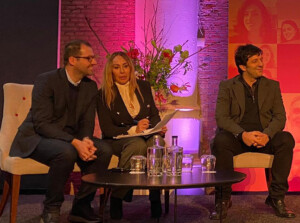
 🗣️ What is whispered interpreting (chuchotage)?
Whispered interpreting, also known as chuchotage, is a form of simultaneous interpreting that does not require booths or technical equipment. The interpreter stands next to the listener and translates in real time by whispering into the target language.
👥 When to use it
This technique is recommended in contexts where only one or two people need translation.
It is ideal in formal for small-scale situations, such as bilateral meetings, confidential business meetings, or institutional visits.
👤 How it works
The interpreter, sitting or standing next to the listener, whispers the translation simultaneously with the speaker’s speech. Discretion and the ability to adapt to the rhythm of speech are essential.
Questions and answers about whispered interpreting
What is whispered interpreting?
Whispered interpreting, or chuchotage, is a form of simultaneous interpreting without technical support. The interpreter translates what is said during a meeting or event in real time by whispering into the listener’s ear. It is often combined with consecutive interpreting (at a press conference, the interpreter whispers the questions asked to the interviewee, but the answer is reproduced in the target language into a microphone).
What does chuchotage mean?
The French term chuchotage comes from the French verb “chuchoter,” which means “to whisper.”
In what situations is it recommended?
It is ideal for small meetings, company visits, bilateral meetings, or events with 1-2 participants who do not understand the language spoken.
What is the difference between simultaneous, consecutive, and whispered interpreting?
- Simultaneous: for large events and multiple languages → requires technical equipment.
- Consecutive: for official events on stage in theaters or cinemas or even small groups → more time, but no technology. Consecutive interpreting is often combined with chuchotage. For example, the interpreter whispers the questions asked by journalists to the interviewee, but then the answer is translated into the microphone or aloud to the entire audience.
- Whispered interpreting: It may or may not be combined with consecutive interpreting: for one or two guests → agile and discreet solution, no equipment required.
How many people can a single interpreter assist with whispered transalation?
An interpreter can translate for a maximum of two people at the same time. Beyond this number, simultaneous or consecutive interpretation is recommended.
Does it require special equipment?
No. No microphones, headphones, or soundproof booths are necessary. It is a flexible and economical solution, but only suitable for contexts with a low noise level.
Which languages do I offer for whispered interpreting?
The service is available in Italian, English, Brazilian Portuguese and French.
Does the interpreter remain seated next to the person for the entire duration?
Yes, the interpreter remains next to the participants throughout the event (or, in the case of a visit to a factory, for example, walks alongside them), translating continuously and discreetly.
Can chuchotage be used in official contexts?
Yes, it is often used in diplomatic settings, institutional meetings, or official visits, where the presence of a small number of foreign guests makes this technique the most efficient.
Can chuchotage be combined with other types of interpreting?
Yes, in more complex events it can be integrated with consecutive or simultaneous interpreting, depending on requirements.
How long does a whispered interpreting service normally last?
It depends on the event. However, as it is a very intense and close-up form of interpreting, it can be tiring for the listener to use it for a whole day. For services lasting more than an hour, two interpreters alternate.
How can I request a quote?
You can request a personalized quote by filling out the online form Request a quote, specifying
- date of the event
- languages required
- number of participants
- modality (in-person or remote)
- program of the event